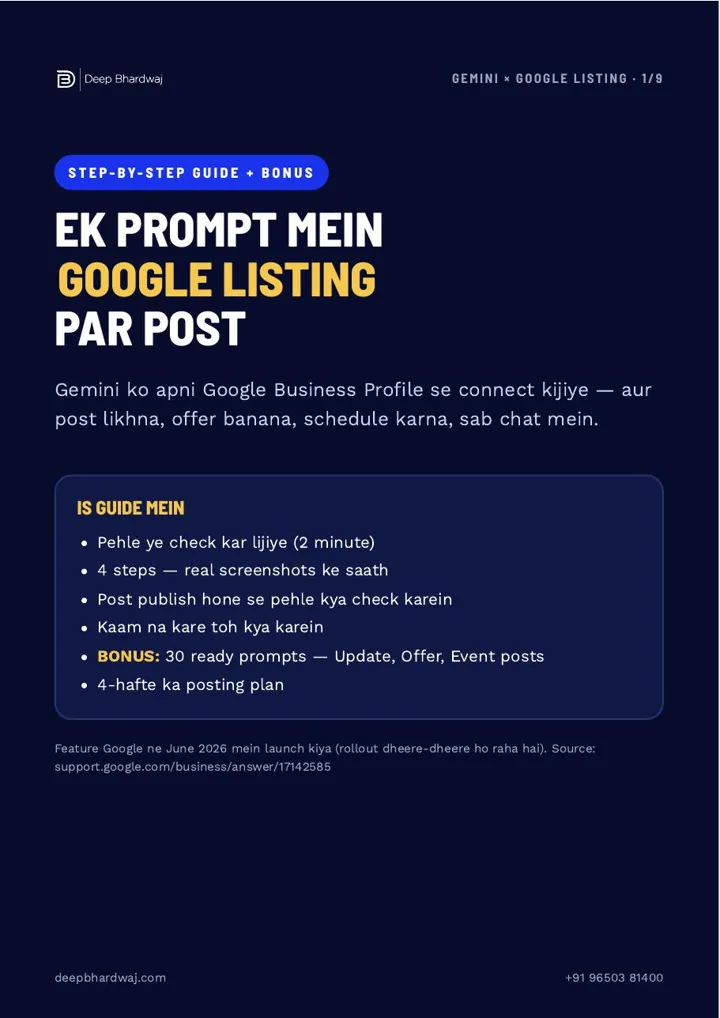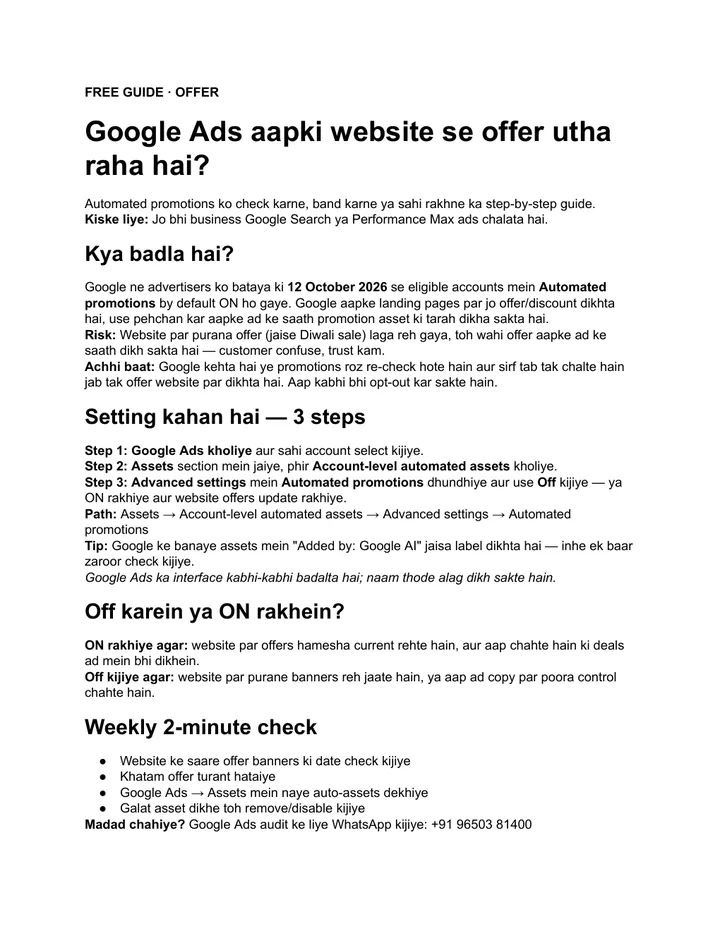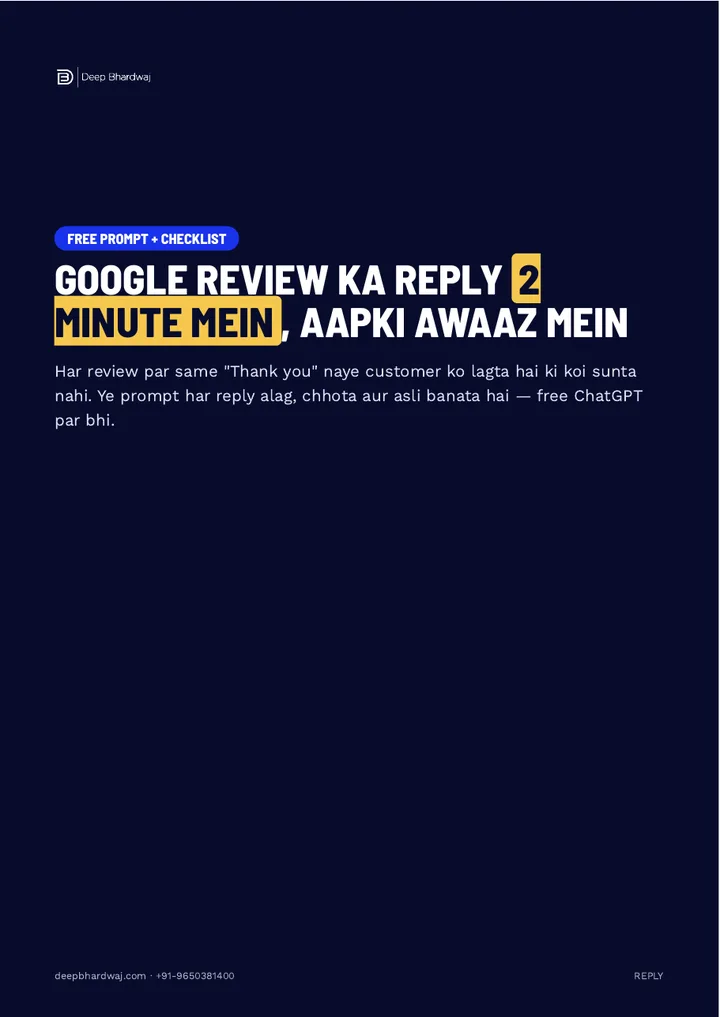

Your listing has fifty reviews, and every one of them has the same reply: “Thank you 🙏”. A new customer scrolling through sees a business that does not really listen. The fix takes two minutes per review: reply to Google reviews with ChatGPT using one fixed prompt that writes in your voice. Replying well is a core part of Google Business Profile management, and this guide gives you the exact prompt, the three steps from Google Reviews to ChatGPT and back, how to handle a one-star review without arguing, and a simple six-point checklist you can follow every week.
Quick answer: Copy the review from your Google Business Profile, paste it into ChatGPT with a fixed prompt that asks for a warm 2–3 line reply using the customer’s name, their service and your area once. For 1–3 star reviews, apologise, state one fix and share a phone or WhatsApp number. Read it, then post it under Reviews.
Key takeaways
- A same-to-same “Thank you” reply tells new customers that nobody is listening.
- One saved ChatGPT prompt writes a different 2–3 line reply for every review.
- Each reply should use the customer’s name, their service and your area once.
- On 1–3 star reviews: apologise, give one fix and move the talk offline.
- Reply within 48 hours and check older unanswered reviews once a week.
Contents
Why does a copy-paste “Thank you” hurt your Google reviews?
Because new customers read your replies, not just your stars. When every review gets the same “Thank you 🙏”, it looks like nobody is listening. A short reply that uses the customer’s name and mentions what they bought shows a real owner who cares, and that is what a first-time visitor is judging.
Replies are also part of how your listing looks next to competitors. Reviews sit alongside the other Google Business Profile ranking factors that matter in 2026, and a listing full of thoughtful replies simply reads as more active and trustworthy to a customer comparing options.
What is the ChatGPT prompt for Google review replies?
It is a copy-paste instruction that tells ChatGPT to reply as you, the owner. It sets clear rules: use the customer’s name, mention their service, name your area once, keep it warm and two to three lines long, and handle bad reviews calmly. It works on the free version of ChatGPT, so there is nothing to buy.
Here is the prompt from the guide, in English (the PDF has the Hinglish original):
You are the owner of [business name], [city]. Write a reply to the Google review below.
Rules:
- Address the customer by name.
- Mention the service or product they wrote about, naturally.
- Use the city or area name once, naturally.
- Sound like me: simple Hinglish, warm, 2–3 lines, no copy-paste lines.
- If the review is 1–3 stars: no arguing. Apologise, say in one line what you will fix, and give phone/WhatsApp for an offline talk: [number].
- No discounts and no false promises.
Review: """[paste the review here]"""
Fill in your business name, city and number once and save it. After that, only the review text changes.
How do you reply to Google reviews with ChatGPT in 3 steps?
Copy the review from your Google Business Profile, paste it into ChatGPT with the prompt, read the reply, then paste it back under Reviews and post it. The whole loop takes about two minutes per review, and every reply comes out different because each one is built from that customer’s own words.
- Open your Google Business Profile or the Google Maps app, go to Reviews and copy the review.
- Open ChatGPT (the free version works) and paste the prompt plus the review.
- Read the reply. If something is off, ask in one line: “make it shorter” or “make it more personal”.
- Go back to Reviews, tap Reply, paste the text and post.
Google’s help page on managing customer reviews explains where the reply option sits for owners and managers of a verified profile.
What does a good reply look like compared with a lazy one?
A good reply names the customer, mentions what they bought or used, and sounds like a person. A lazy reply could sit under any review on any listing. The table shows the difference using the guide’s own examples, so you can see what the prompt is aiming for before you try it.
| Review | Lazy reply | Reply from the prompt |
|---|---|---|
| 5★ after an AC service | “Thank you 🙏” | “Rahul ji, AC service ke baad aapka review padh kar achha laga! Noida mein jab bhi zaroorat ho, hum yahin hain 🙂” |
| 1★ about a delay | An argument about who was at fault | “Ankit ji, der ke liye sach mein maafi. Aaj hi team se baat karke ise theek karte hain — please 98xxxxxx par call kijiye.” |
Notice the area name in the first reply. If you serve Noida like the example business, the same local wording belongs on your website too, which is what a Noida-focused SEO strategy builds on.
How should you reply to a bad review?
Do not argue. Apologise, say in one line what you will fix, and give a phone or WhatsApp number so the conversation moves offline. Never call the customer a liar in public and never offer a discount in the reply. The next customer reading it cares more about how you handle problems than about the complaint itself.
Bure review par bahas mat kijiye. Maafi, ek line ka hal, aur offline baat ka number — bas.
— Deep Bhardwaj
If a review looks fake, that is a different job. Our guide on reporting fake Google reviews the right way covers the reporting steps, and Google’s prohibited and restricted content policy for Maps lists what counts as fake engagement. Still post a calm reply while you wait.
What should your review reply checklist include?
Six habits from the guide keep replies consistent: reply to every review within 48 hours, mention the customer’s name and service, keep every reply different, handle bad reviews with an apology plus a fix plus an offline contact, never share personal or sensitive information, and once a week check older reviews that have no reply yet.
Avoid the four mistakes the guide flags: the same “Thank you 🙏” everywhere, arguing on bad reviews, calling a customer a liar, and fake reviews of any kind. Good replies also make every other channel work harder, because the people who click your ads or posts check your reviews too; that link is why review care sits inside our digital marketing services. Done weekly, this fits neatly into a monthly SEO and listing management plan rather than becoming another chore.
Replying is half the job; getting new reviews is the other half. This guide on getting more Google reviews in India without breaking the rules covers asking the right way, and our review keywords guide shows what you want customers to mention.
Is it safe to use ChatGPT for review replies?
Yes, if you stay the editor. ChatGPT drafts; you read every reply before it goes live, fix anything that is not true and remove anything personal. The prompt already bans discounts and false promises. What matters is that the reply is honest and specific to that customer, not which tool typed it first.
This is the same balance covered in what ChatGPT can and can’t do for SEO: it is a fast assistant, not a replacement for your judgement. Google’s guidance on helpful, people-first content makes the same point about writing for real readers. If you want a second pair of eyes on your listing and website overall, book a free SEO audit.
Start replying properly this week
Save the prompt with your business name, city and number filled in. Then work through your unanswered reviews, newest first, and keep to the 48-hour habit after that. When you reply to Google reviews with ChatGPT this way, every customer gets a reply that sounds like you, and every new visitor sees a business that listens.
Services that help with this
- Local SEO: Ongoing Google Business Profile management, including review replies and review growth.
- Digital marketing: Turn the trust your reviews build into calls, bookings and sales across Google and social.
- Free SEO audit: See how your listing, reviews and website compare with the competitors around you.
TL;DR
- Stop using the same “Thank you” on every Google review.
- Use one saved ChatGPT prompt to draft a short, personal reply in your voice.
- On bad reviews: apologise, give one fix and share a number for an offline talk.
- Reply within 48 hours and check unanswered reviews every week.
Frequently asked questions
Should I reply to every Google review, even 5-star ones with no text?
Yes, reply to every review you can. A short, warm reply on a five-star rating with no text still shows new customers that a real owner is reading. Use the customer’s name and keep it to one or two lines. The guide’s checklist sets a simple rule: reply within 48 hours, and once a week look for older reviews that never got a reply.
Can Google tell if my review reply was written with ChatGPT?
What matters is whether the reply is honest, specific and useful to the customer reading it. Treat ChatGPT as a drafting assistant: read every reply before posting, correct anything that is not true and remove anything personal. Replies built from the customer’s own words, with their name and service, read as genuine because they are about that specific visit.
Should I offer a discount in reply to a negative review?
No. Offering a discount in a public reply can look like you are buying a better rating, and it encourages others to complain for one. The prompt in this guide bans discounts and false promises. Instead, apologise, say in one line what you will fix and share a phone or WhatsApp number so you can sort it out privately.
Is it okay to mention my city or service in review replies?
Yes, when it fits naturally. The prompt asks for the customer’s service and your area once, because that is what a real owner would say, for example thanking a customer for an AC service in Noida. Do not stuff keywords or repeat the same phrase on every reply; that reads as spam to customers and undoes the personal tone.
What if I get a review from someone who was never my customer?
Do not accuse them in public. Post a calm reply saying you could not find their visit and inviting them to call you. Then report the review through your Google Business Profile, choosing the reason that fits. Removal is not guaranteed, which is why the calm public reply matters: future customers judge you by how you respond.